Of the Cerrano Tower
The Cerrano Tower Marine Protected Area (A.M.P.) was established by a decree of the Ministry of the Environment and Protection of the Territory and the Sea in 2009.
The water mirror of the Torre del Cerrano Marine Protected Area features typical sandy beach of the Adriatic Sea and some parts of rocky bottoms. The area is home to a significant number of marine animal species and a small but diverse contingent of plant species (such as the Adriatic gastropod, Trivia adriatica, and Sabellaria halcocki). In the underwater environment of the protected area, you can easily encounter various species of fish and mollusks, including groupers, sea bass, sole, and sea bream, which live in contact with the sandy bottoms characterized by extensive and important banks of Chamelea gallina (common clam).
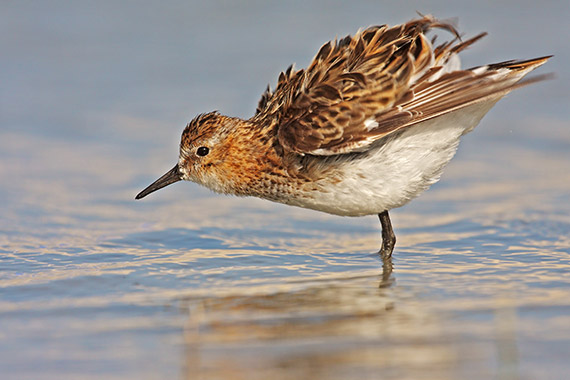
On the dunes of the Marine Protected Area, in addition to observing many interesting insect species such as Scarabeus semipunctatus and the rare Lamprinodes pictus, you can also find the presence of unusual and particular bird species. The Kentish plover (Charadrius alexandrinus) nests here, a rare migratory bird that frequents the beach from April to late September and returns every spring to lay its eggs.
Among the dune vegetation, you can find beautiful specimens of Sea Daffodil (Pancratium maritimum), Gargano Mullein (Verbascum niveum subsp. garganicum), Shore Bindweed (Calystegia soldanella), and Beach Sand Spurge (Euphorbia peplis). In the southern area, near the pine forests, there is also a dense population of the extremely rare Beach Saffron (Romulea rollii).
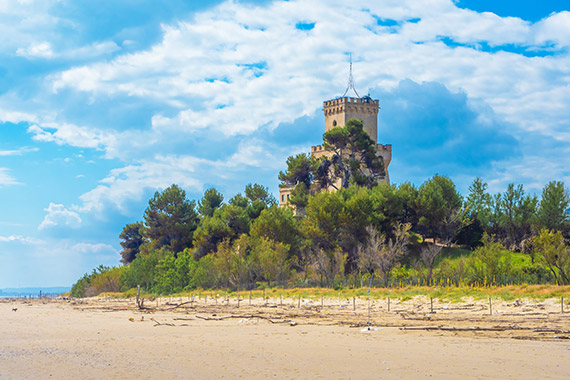
The pine forest, inhabited by Aleppo Pine (Pinus halepensis) and Stone Pine (Pino da pinoli), constitutes a unique environment, a continuum between the sea and land that creates a particularly favourable microclimate during the summer season and contains elements of high natural value. Just in front of the tower, immersed in the waters, lies what several researchers believe to be the ancient port of the city of Hadria, likely from Roman times.
Source: abruzzoturismo.it